
The reef manta ray and the cleaning station
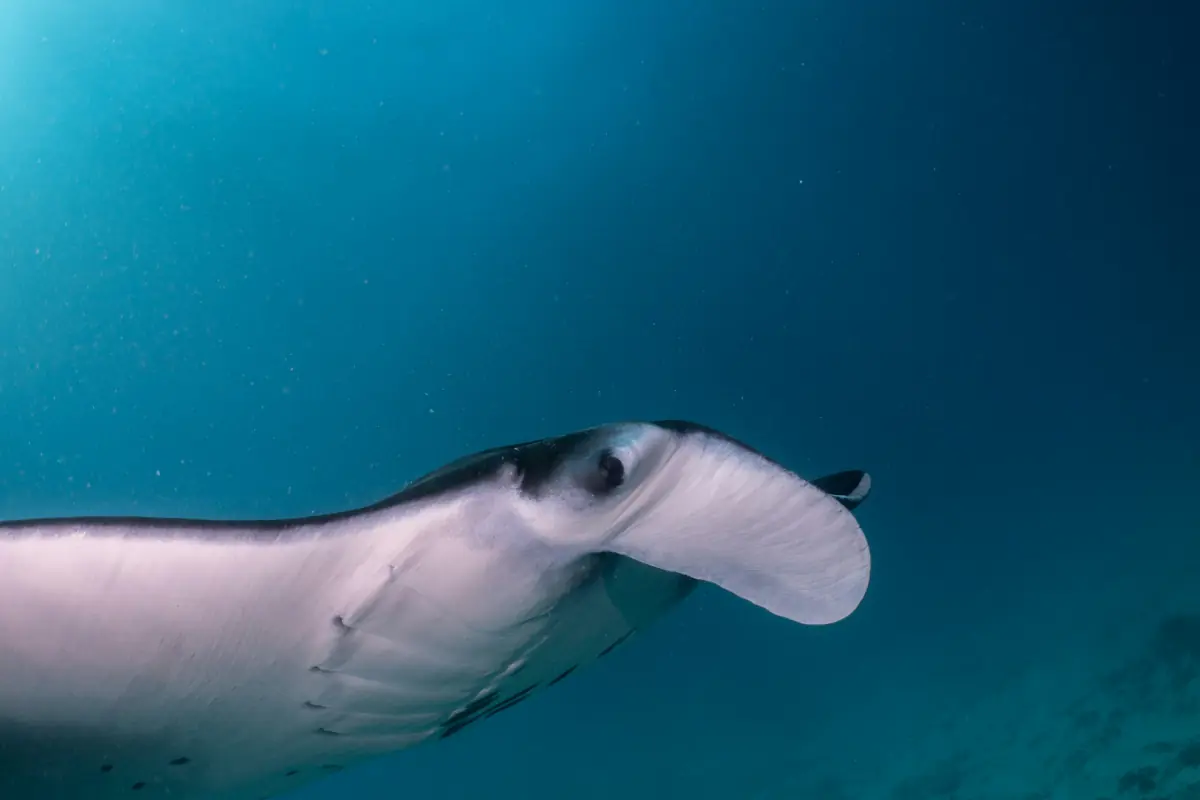
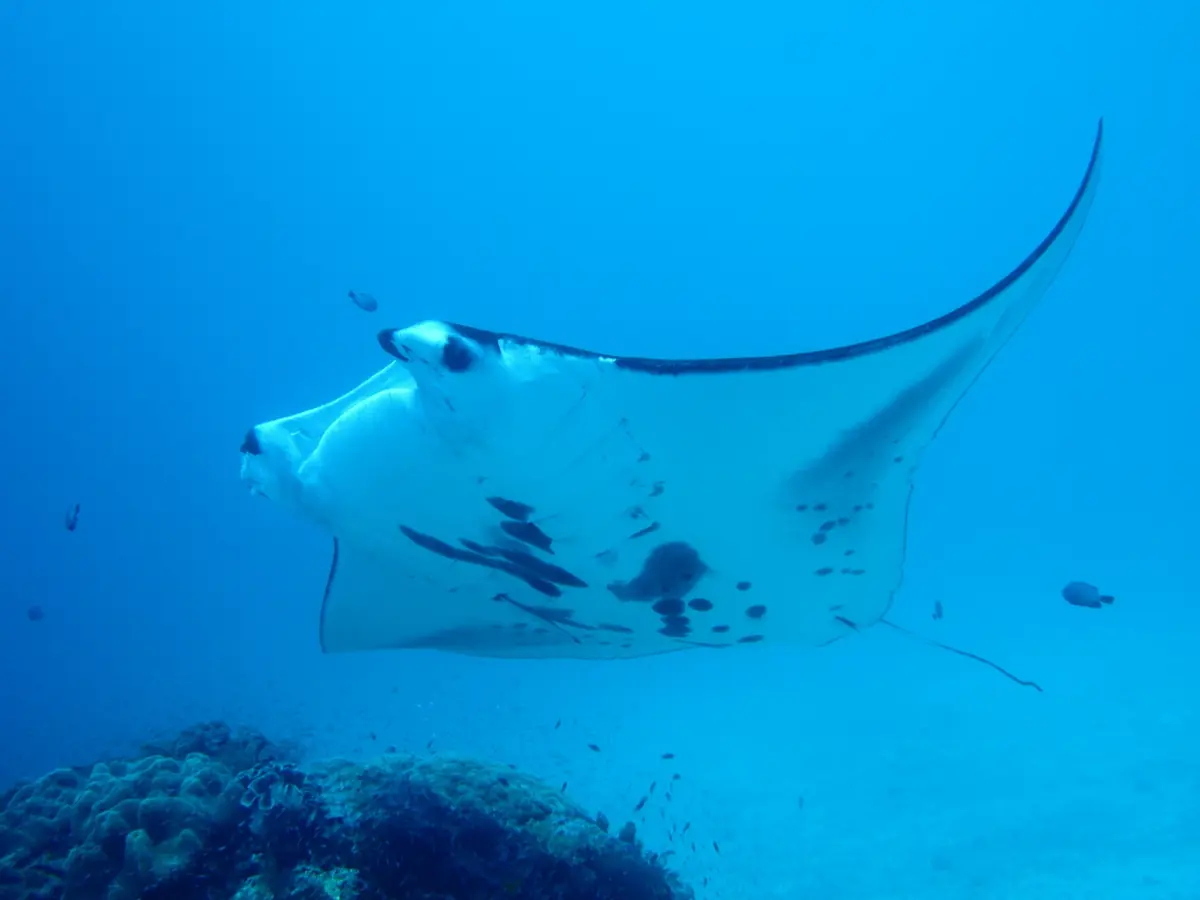
The reef manta ray, Mobula alfredi, is the species associated with Manta Point off Nusa Penida's southwest coast. This is a marine site reached by boat, where smaller fish clean the mantas around the reef. Watching this behaviour is different from swimming towards an animal for a close photograph: the cleaning station needs space around it, and the manta needs a clear route through the water.
Size descriptions refer to disc width, the span across the animal, rather than body length. The species averages 300 to 350 cm in disc width and can reach 431 cm. Those are species figures, rather than measurements of every manta you might encounter here. They also should not be confused with figures for oceanic mantas. A photograph without a scale is a poor basis for estimating an individual animal's size.
Manta Bay has a different role: it is described as a feeding area, while Manta Point is a cleaning station. The names are not interchangeable when choosing a route. A boat itinerary allowing either place depends on the sea conditions; it does not promise both. Start with the snorkeling options if you want to observe from the surface, or the diving guide for certification and equipment requirements.
Manta ecology and diving
Our take: Certified Open Water divers can combine the ecology course with two guided dives.
Hand-picked tours, booked through GetYourGuide. Prices are indicative starting prices in US dollars (as of November 2026). Tap a tour for live availability and the current price in your currency.
Learn about manta ecology through diving
The ecology course combines learning with two guided fun dives for certified Open Water divers; the Manta Point dive depends on conditions.
Distance and encounter rules
Give mantas room to move. Do not touch, feed, chase or surround them, and keep their path clear. Enter the water gently rather than jumping in, swim calmly and follow the guide's positioning instructions. An animal approaching of its own accord is a reason to stay still, rather than reach out. The encounter remains led by the animal's movement, even when it passes closer than expected.
Keep the cleaning area open instead of gathering above the rocks. Divers should avoid swimming over the cleaning station, and snorkelers should resist diving down in front of a manta. A clear view from farther away is preferable to blocking an animal's approach. These habits apply whether the camera is in your hand or someone else is taking photographs.
The management plan from 2017 contains a historical encounter code. It is useful background for understanding why distance and clear approach routes matter, rather than a newly issued set of enforcement rules. Follow the current briefing for the specific activity and leave numerical distance arguments out of the encounter itself: moving closer for a picture is not the purpose of the visit.
Conservation history
Nusa Penida's national protected-area designation was established on 29 March 2018, following the older management and zoning plan of 2017. These dates belong to conservation administration. They do not mark the discovery of Manta Point or explain how the site got its name. Keeping that distinction makes the protection story useful without adding an invented origin story.
The selected ecology activity gives certified Open Water divers a more structured way to learn. It includes digital learning, a course led by a marine scientist, two guided fun dives and equipment rental. One dive targets Manta Point when conditions allow, while the other visits a coral reef site. It is a diving activity with entry requirements, rather than a general wildlife walk or a snorkeling lesson. Bali boat transfers and transport to the dive centre are arranged separately on request.
Wild animals and a flexible boat day
A local population is present throughout the year, but sightings and access remain uncertain on any individual day. Wind and swell can change the route before anyone enters the water. Water movement also affects how comfortably you can hold your position while watching. Build the day around a responsible boat outing and the guide's decisions, with a manta encounter as a possibility. The season and water-temperature guide explains why a dry month alone cannot settle the decision.
Questions about manta encounters
Which manta species is found at Manta Point?
The reef manta ray, Mobula alfredi. Size figures here describe disc width for the species, not the length of every animal at the site.
Is Manta Point the same place as Manta Bay?
They are different places. Manta Point is a cleaning station; Manta Bay is described as a feeding area. Read the route's alternatives when choosing a boat trip.
Can snorkelers join the ecology diving course?
The featured course requires Open Water certification and includes two fun dives. For a surface activity, use the snorkeling page instead.
What should I do if a manta approaches?
Stay calm and still, leave its route open and avoid touching it. Follow the guide rather than moving into the animal's path for a photograph.